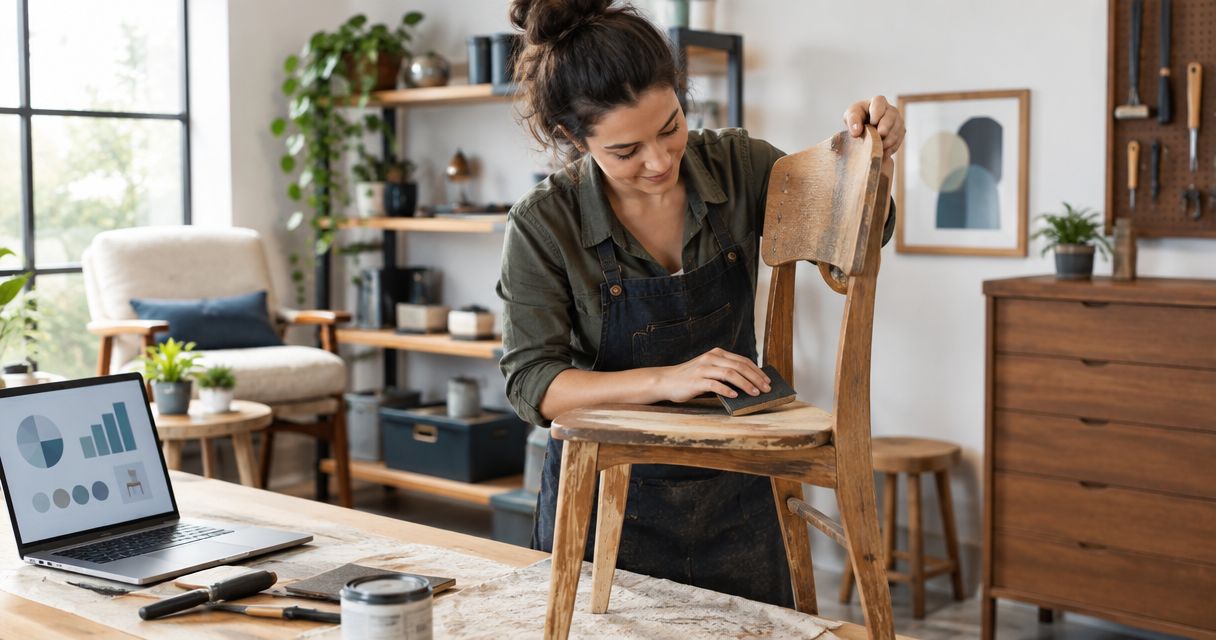
The money you need to start flipping furniture depends almost entirely on which model you use: buying inventory upfront or working with pieces that already exist somewhere else, waiting to be picked up.
TL;DR
Most people asking how much money to start flipping furniture picture a garage full of thrift-store chairs and a credit card bill. That's one version of the business, and it's the expensive one.
Before committing to that version, look at the cost to get started as a Sharetown rep, because that model skips the inventory purchase most beginners underestimate. The two paths lead to the same outcome — reselling furniture for profit — but they start from very different cash positions in 2026.
There's no single dollar figure that applies to everyone, because the answer changes based on where your inventory comes from. Buy furniture to flip it, and you're carrying purchase cost, storage cost, and the risk that a piece sits unsold. Work off items that already belong to someone else — like retailer returns routed to you for pickup — and the inventory line disappears from your startup math.
Inventory
Vehicle
Tools & supplies
Storage
Marketplace fees
The verdict: if your goal is to start flipping furniture with the least cash tied up before you make your first sale, an inventory-free model beats buying pallets or estate lots every time — the vehicle and basic supplies are the only true fixed costs either way.
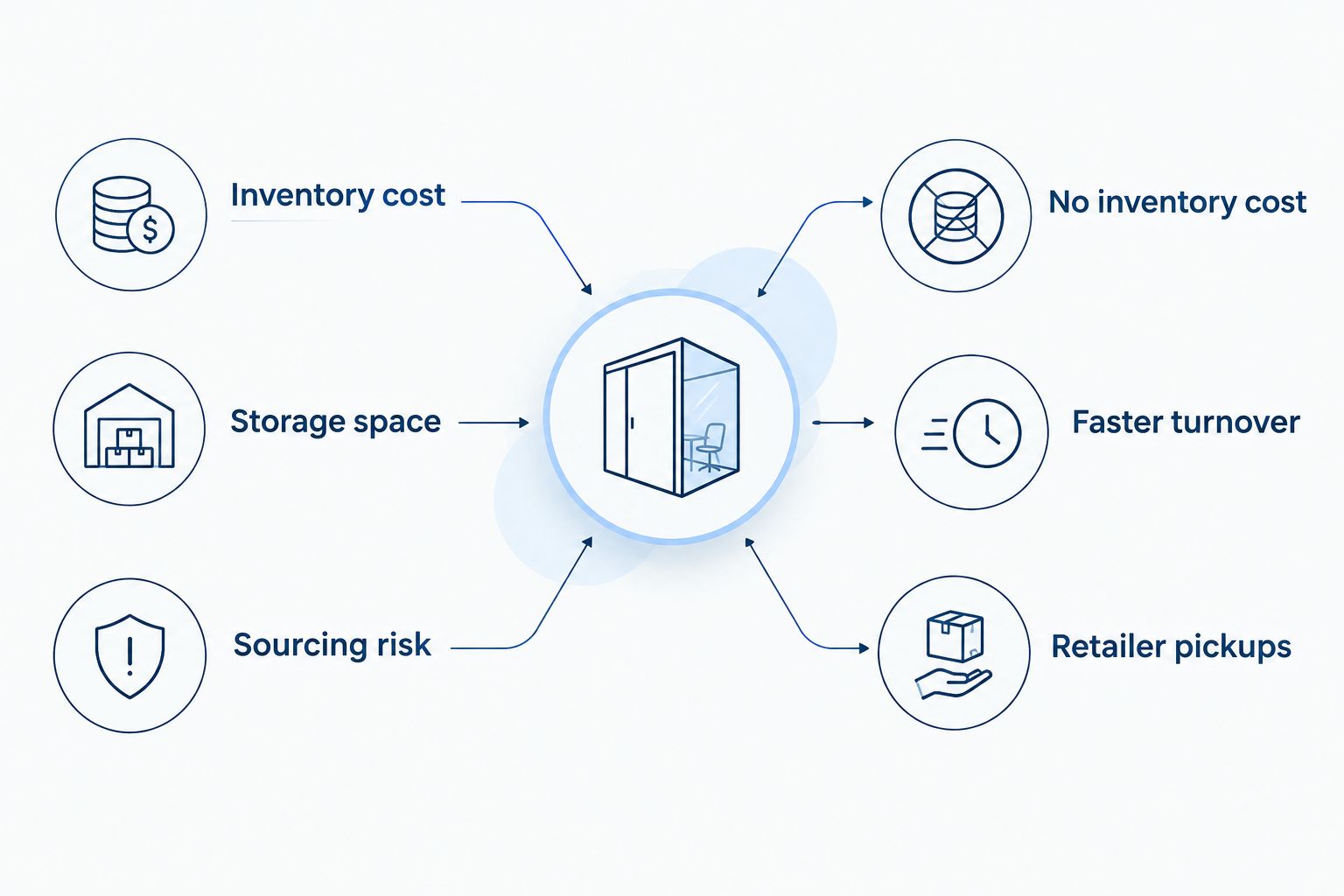
Sourcing method is the single biggest lever on how much cash you need before your first sale.
Buying inventory to flip means every cost hits before revenue does. That's the trade-off for full control over what you buy and where you sell it.
Each of those categories can be large or small depending on how selective you are, but none of them disappear. Compare that against reselling side hustles ranked by startup cost and furniture consistently lands on the higher end because of size and hauling requirements.
Buy-and-flip model — best for: people who already own a truck, have storage space, and want full control over sourcing. Skip if: you don't have a place to store unsold pieces or can't absorb a slow-moving item.
Sharetown routes furniture, mattress, and fitness equipment returns from retailers to independent reps, who pick the items up, clean and prep them, then resell locally for a profit. The inventory already exists — it's sitting in a retailer's returns pipeline, not on your credit card.
That structure removes the single largest cash outlay in traditional flipping. You still need a vehicle that can haul oversized items and basic cleaning or sanitizing supplies, but you're not fronting money for furniture you haven't sold yet.
Sharetown rep model — best for: people who want to start flipping furniture without tying up cash in inventory. Skip if: you don't have access to a suitable hauling vehicle, since that requirement doesn't go away under any model.
Ask five people how much money to start flipping furniture and you'll get five different answers, because these variables move independently of each other:
Start flipping without buying inventory first
Pick up retailer returns and resell them locally for profit.
You can't start with literally zero money, since gas, cleaning supplies, and access to a hauling vehicle are unavoidable. What you can skip is the inventory purchase, which is the largest cost in the traditional model — an inventory-free route like picking up retailer returns removes that line item entirely.
Storage and holding time is the cost most beginners underestimate, not the furniture itself. A piece that sits unsold for weeks racks up storage rent or ties up garage space you could use for the next flip, quietly eating into the margin you thought you'd keep.
Flipping furniture stays worth it in 2026 for people who control their cost side, whether that's by sourcing carefully or by working with a model that removes the inventory cost altogether. The margin comes from the gap between what you pay to acquire and prep an item and what it sells for locally — not from the furniture category itself.
Yes, a truck, van, or trailer capable of hauling oversized items is required under any furniture flipping model, including picking up retailer returns as a rep. This is one cost that doesn't disappear no matter which sourcing method you choose.
How much money do you need to start flipping furniture in 2026?
The amount depends on your sourcing model: buying pallets or estate sale lots requires cash upfront for inventory, while a pickup-based model like a Sharetown rep route removes that cost entirely. Either way, a hauling vehicle and basic cleaning supplies are unavoidable.
Can you flip furniture without buying inventory?
Yes, working with items already sourced from somewhere else, such as retailer returns picked up by Sharetown reps, removes the inventory purchase from your startup costs. You still handle cleaning, hauling, and reselling.
What's the biggest hidden cost in a furniture flipping side hustle?
Storage and holding time, not the furniture purchase price, is the cost most beginners miss. An unsold piece taking up garage space or a paid storage unit erodes margin quietly over weeks.
Do you need a business license to flip furniture?
Requirements vary by state and city, so check local rules before scaling past occasional sales. A resale certificate is often the first document beginners look into as volume grows.
Is furniture flipping profitable in 2026?
Furniture flipping stays profitable in 2026 for people who manage acquisition and holding costs closely. Margin comes from the gap between what you pay to source and prep a piece and what it resells for locally.
How do Sharetown reps make money flipping furniture?
Sharetown reps pick up returned furniture, mattresses, and fitness equipment from retailers, clean and prep the items, then resell them locally for profit. The retailer already owns the inventory, so reps aren't purchasing it upfront.
What tools do you need to start flipping furniture?
Basic cleaning and sanitizing supplies cover most resale-ready prep, while sanders, wood filler, and upholstery tools are only needed if you're refinishing pieces. A hauling vehicle counts as the one non-negotiable tool.
The question isn't really how much money you need — it's how much of that money you're willing to tie up before you know a piece will sell. Buying inventory upfront means betting your own cash on demand you haven't confirmed yet; working off retailer returns means the bet already happened before the item reaches you. Use calculating profit margin on a furniture flip to see exactly where your money goes once a sale closes, whichever model you pick.