You don't need a CDL to drive for Sharetown in 2026. Federal law only requires a commercial driver's license for vehicles with a gross vehicle weight rating (GVWR) over 26,001 pounds, and the pickup trucks, cargo vans, and SUVs reps actually use for mattress, furniture, and fitness equipment pickups sit well under that line. The real qualifier isn't your license class — it's whether your vehicle can safely fit the items you're picking up, whether it passes a basic safety check, and whether you clear Sharetown's standard background screening.
TL;DR
A lot of people considering Sharetown assume oversized-item hauling means truck driver credentials. It doesn't. Sharetown reps are independent operators picking up single items — a mattress, a sectional, a treadmill — not running commercial freight routes, so the licensing bar stays at the same level as any other errand-running gig. That distinction matters if you're deciding whether this side hustle is worth pursuing in 2026 without going through CDL school first.
No — a regular Class C driver's license is enough for every standard Sharetown pickup in 2026. The Federal Motor Carrier Safety Administration sets the CDL threshold at vehicles with a GVWR over 26,001 pounds, and the vehicles reps typically drive don't come close.
Half-ton pickup (F-150, Silverado, Ram 1500)
Cargo van (Transit, Sprinter, ProMaster)
SUV with an enclosed trailer
Rented box truck (16 ft class)
Box truck or straight truck over 26,001 lbs GVWR
Verdict: standard pickup trucks, cargo vans, and SUVs cover nearly every Sharetown pickup, and none of them require a CDL.
What actually determines whether your vehicle works isn't the license in your wallet — it's cargo bed length, door clearance, and whether the item fits without folding a mattress in half. A half-ton pickup with a 6.5-foot bed handles most queen and king mattresses with the tailgate down and a strap. A cargo van covers furniture that needs to stay dry or out of sight. An SUV with a small trailer works for lighter fitness equipment like an elliptical or a weight bench.
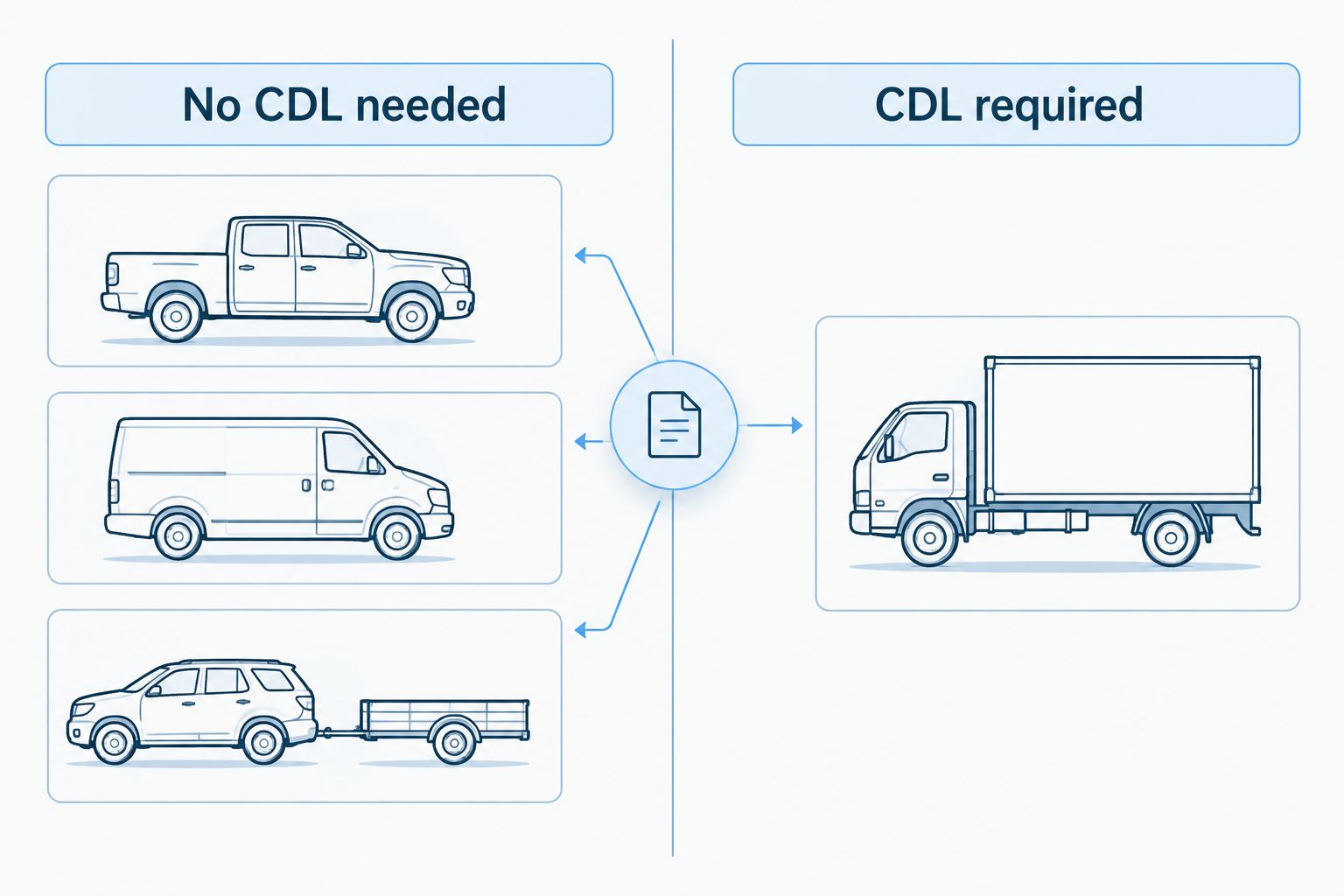
Most Sharetown pickups stay in the no-CDL column without any special equipment.
If you're weighing whether your current vehicle is even worth the gas, the fuel-efficient truck options built for part-time hauling side hustles are worth a look before you commit a full route to it.
Apply to become a Sharetown rep
See if your vehicle qualifies for pickups near you.
A few factors shift what you'll need beyond the baseline no-CDL answer:
Yes — most reps use their own truck for Sharetown pickups, and a standard personal vehicle is the norm rather than the exception. A half-ton pickup or midsize SUV covers the bulk of mattress, furniture, and fitness equipment pickups without any modification.
Yes — Sharetown requires a background check run through Checkr as part of the application, and that process matters far more to approval than any license class. The Checkr-connected application step is where most of the vetting actually happens, not at a DMV counter.
A half-ton pickup with a 6-foot or longer bed handles the majority of Sharetown pickups in 2026, including mattresses and standard furniture pieces. Larger items like sectionals or bulky gym equipment sometimes call for a cargo van or a small trailer, but nothing that crosses into CDL territory.
Do Sharetown drivers need a CDL in 2026?
No, Sharetown drivers do not need a CDL in 2026. A standard driver's license covers every vehicle type reps typically use, since none exceed the 26,001-lb GVWR threshold that triggers federal CDL rules.
What license do you need to drive for Sharetown?
A regular Class C driver's license is all you need to drive for Sharetown. No commercial endorsement or special class is required for standard pickup trucks, vans, or SUVs.
Can I use a rented box truck for Sharetown pickups without a CDL?
Yes, as long as the box truck's GVWR stays under 26,001 lbs, which covers most 16-foot rental class trucks. Above that weight, federal law requires a CDL regardless of who's driving.
Is a background check required to become a Sharetown rep?
Yes, Sharetown requires a background check as part of the application process, run through Checkr. This screening step matters more to approval than license class.
Does towing a trailer change the CDL requirement for Sharetown pickups?
It can, if the combined weight of the towing vehicle and trailer crosses state-specific thresholds, even under the federal 26,001-lb line. Most reps towing small enclosed trailers for lighter items stay under any such limit.
What vehicles work best for Sharetown mattress and furniture pickups?
Half-ton pickup trucks and cargo vans work best for Sharetown mattress and furniture pickups in 2026. Both handle queen and king mattresses, dressers, and most furniture without modification.
Do I need commercial auto insurance to drive for Sharetown?
Standard personal auto insurance sometimes excludes paid hauling, so check your policy for a commercial-use rider before starting regular pickups. This is separate from any CDL requirement.
The 26,001-lb GVWR line is the actual legal boundary that matters here, not anything specific to Sharetown — it's the same federal threshold that determines CDL requirements for movers, delivery drivers, and anyone else hauling for pay in 2026. If you're still deciding whether the opportunity is worth it, the honest math on approval timelines and rep earnings is a better use of your research time than worrying about a license you won't need. Read up on how long Sharetown approval typically takes before you assume the process is slow, and check whether Sharetown is legit if that's the question actually holding you back.